MASK OFF YOUR BHAKTI

ON DIMENSIONS OF SPIRITUAL PRACTICES, NEURODIVERGENCE AND THE COURAGE TO STOP PRETENDING/PERFORMING SPIRITUALITY
There is a peculiar convenience available inside spiritual institutions.
When we do not understand another human being, or perhaps when we do not want to – because understanding takes time, attention and, yes, prāṇa śakti too… there is an easier route available – let us flatten the depth and interpret them quickly (huh!) And once spiritual vocabulary enters the picture, interpretation can acquire the appearance of wisdom very fast.
The thing is, given the hold of devotees on scriptures, they can very easily spiritualize the misunderstanding. And the condition of the jiva. Here is how this superimposition of the template/phrase ‘it is bad karma’ can manifest:
So, let us say, you ..
1. Cannot maintain a rigid routine? Templatized Cause: You have an indisciplined mind
2. Cannot sit through hours of noise, people and stimulation? Templatized Cause: Mind is too restless.
3. Need solitude? Templatized Cause: Averse to association/antisocial.
4. Speak too directly? Templatized Cause: False Ego/fault finding.
5. Forget ordinary things but remembers absurd amounts of detail about one subject? Templatized Cause: Selective effort.
6. Ask question on an instruction because the logic does not add up? Templatized Cause: Rebellious/attitude problem.
7. Burn out after appearing perfectly functional for months? Templatized Cause: Weak sādhana.
And when none of these explanations quite fit, there is always the final theological container – well, maybe you have done some vaishnava aparadha and/or real bad karma.
Problem solved.
Except nothing has actually been either solved…or understood.
This is the part of standard preaching that I want to challenge.
Not because every preacher must become a neuroscientist or a psychologist…or because scripture should suddenly be rewritten in the language of diagnostic manuals. Also, certainly not because every unusual behaviour should be explained away as neurodivergence.
We all have limited spec of a short life on this planet, especially in this yuga. Which is exactly why we need compassionate and conscious preaching. Actually, the challenge is much simpler….to acknowledge that not knowing something is not a permission to judge or flatten nuances of life.
But bhakti itself is not constrained by the limits of the material mind. It is the domain of the pure soul, above and beyond the instruments of execution of devotion.
WHY THIS TOPIC? WHY NOW?
THE INITIAL JOURNEY TOWARDS SELF-DISCOVERY.
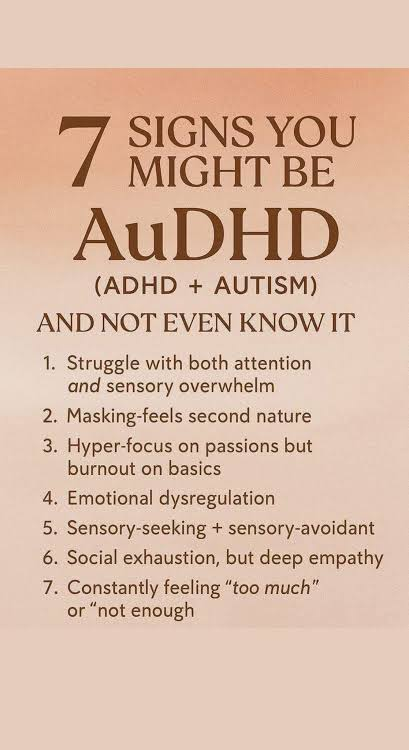
I have come, gradually…and believe me, it has been an awfully stunning realization… to understand myself through the lens of AuDHD – the co-occurrence of autism and Attention-Deficit/Hyperactivity Disorder.
I did not wake up one morning, discover the word AuDHD, and suddenly find an explanation for my life. It has been much slower than that. Actually, for a long time, there were simply contradictions…and I just couldn’t figure out why.
- How can someone be deeply disciplined about one thing and completely unable to organise another?
- How can the same mind that can spend hours absorbed in a difficult subject forget something embarrassingly ordinary?
- How can someone genuinely love people and still need long periods away from them?
- How can a person be capable, articulate, responsible and productive, and yet sometimes find very ordinary demands strangely exhausting?
- How can there be intensity without consistency? Enormous attention in one direction and almost no usable attention in another? A mind that can make connections rapidly and deeply, but becomes overwhelmed by things that seem simple to everyone else?
For years, these contradictions did not necessarily appear as contradictions from the outside. They appeared as character…as my behavior…and as my attempts to mask what I was truly feeling inside.
Sometimes even from myself. And wonder why I don’t fit anywhere. And people usually dislike me. And my difference. So how does the overwhelmed mind handle it?
You compensate. You build systems. You work harder. You hide the things that make no sense. You laugh at your own forgetfulness. You push through exhaustion. You become exceptionally competent in certain areas, partly because competence is also a very effective camouflage. Immensely and stupefyingly quick in analytics and very successful in mundane professions.
And somewhere along the way amidst the inner battle as to why you struggle and feel different internally, you begin constructing explanations for yourself….like,
- Perhaps I am just badly organised.
- I lack discipline.
- I am too sensitive (and trust me, hundreds of them tell you that too)
- I think too much.
- I am simply difficult.
- Maybe….just maybe, everybody struggles like this and I am making too much of it.
Then, slowly, another vocabulary entered through my burning need to understand myself and my peculiarity…and why people despised me. I came across scientific terminologies like attention regulation, Executive functioning, processing, hyperfocus, social masking, neuro-divergence, autism, attention-Deficit/Hyperactivity Disorder…AuDHD.
I was initially cautious about that vocabulary…and I still am! Because of how the external world quickly categorizes people with disdain, disregard, and disinterest.
A diagnosis, or even a framework that helps us understand ourselves, am afraid, can become another totalizing identity. Human beings are too complicated to be swallowed by an acronym. Yet they are reduced to acronyms. But here is something important that happens when a framework begins explaining not one isolated difficulty, but a pattern….inside your head and inside your own life.
Things that previously looked like unrelated personal failures start sitting beside each other….more as information than excuses. That distinction and understanding why something is difficult matters a lot…and does not absolve us of responsibility to address it.
You stop asking “Why can’t I be like everybody else?” The real question becomes, “What is actually happening here…to me?”
And that is where my AuDHD enquiry became unexpectedly spiritual. One quick clarification here – I was not looking at any spiritual vocabulary or scripture or devotee to validate a neurological label. They cannot and should not. And certainly not because I wanted to convert neurodivergence into some mystical badge of specialness. It is irrelevant.
The spiritual question arrived much more quietly.
I began looking backwards at the language through which human difficulty is often interpreted inside religious spaces. And purely from the preaching lens, suddenly some familiar words/labels/accusations sounded very different. These were used very often to identify my karmic/material ‘problem’:
Lack of discipline….Too emotional….Too intense….Too sensitive….Cannot surrender….Has attitude problem…Overthinks and Questions too much….fault finding, etc. And when the behaviour becomes difficult enough for other people to understand – you also hear expert opinions like Mano-roga/Mental problem/Crazy/Loose nut….or the explanation that can end almost every enquiry before it begins: it is your past bad karma.
This was the uncomfortable turning point for me. Because once I began understanding that some behaviours may arise from how a person’s brain and nervous system actually function, I could no longer hear these spiritual labels innocently.
I began asking a different question…why has the spiritual vocabulary available to us become narrower than the human being standing in front of us? This is that one question which should wake up and shake up every preacher!
Because there is a profound difference between saying “This person’s mind processes the world differently” and “This person’s mind is materially/spiritually defective”. If bhakti is transcendental, why is a person’s temporary condition in this temporary world subject to dissection under the microscope? As long as the person has accepted and endeavoring in the process of devotion. BTW, autistic people are known to be on the genius spectrum which explains why they have difficulty forming bonds.
There is another danger here – character judgments can very quickly become theological judgments. And very soon the victim becomes the villian – they now have not only got to deal with their own lacunae, but also deal with the suspicion that their difficulty means something is spiritually wrong with them.
THE MASK I HAD NOT RECOGNISED
This self-discovery made me recognise something else rather uncomfortable. I had not merely and desperately been compensating for my differences in the material world. I had also, at times, been trying to understand whether I was performing spirituality correctly. There is an external picture of what a sincere devotee often appears to look like – regular, socially available, comfortable with association, accepting of instruction, emotionally regulated, able to sustain routines, able to sit through long programmes, able to respond to spiritual life in ways that are recognisable and familiar. Somewhere along the way, it becomes very easy to confuse resemblance to that picture, with depth of bhakti. I was performing.
That is where neurodivergent masking can enter spiritual life. Not because bhakti itself is masked, but because the practitioner begins masking the difficulty of the body and nervous system, through which bhakti is being practised. Instead of simply asking, “How do I sincerely practise Krishna consciousness through the mind and body I currently have?”, the question quietly becomes, “How do I make myself look like the kind of devotee who is doing this properly?” Those are not the same – one is about sincere spiritual engagement. The other can gradually become performance. And yet again, I was performing
And this is where the title of this article comes from. To take the mask off your bhakti does not mean to dilute the process, reject discipline, or turn personal preference into a spiritual philosophy. It means refusing to believe that successful imitation of another person’s temperament, social capacity, rhythm or neurological functioning is itself proof of devotion. Bhakti is not cookie cutter – only the foundations in the initial stage has a standard model. Bhakti itself belongs to the unique soul. The mask belongs to the embodied personality trying desperately to appear acceptable.
THE LARGER IMPLICATION ON PREACHING TO THE WORLD
AuDHD became the doorway through which I began noticing a much larger problem in the way we sometimes preach. Our scriptures and acharyas have given us a vast spiritual vocabulary for understanding the soul. But the application or the subset of that vocabulary for understanding the journey of that soul through the human body can become astonishingly crude. And when that happens, spiritual language (is it really?) can begin doing something it was never meant to do, through the preacher’s mouth. It stops illuminating the variegatedness of the Lord’s creation and flattens everyone into being another brick in the wall. The templatization is meant for the foundations not for the entire building design. Instead of compassion and curiosity, it makes us declare with certainty our explanations of what the problem really is. The label becomes more important than the person.
I have heard one of the senior devotees calling a vaishnava woman a ‘loose’ because she was undergoing therapy for a specific depressive state. Her gentle, sweet personality became irrelevant and the label remained.
That is the conversation I want to open.
WHEN BEHAVIOR HIDES CONSCIOUSNESS
The story of Jaḍa Bharata offers us a striking caution here. I am certainly not suggesting …not for a second…that an exalted personality like Jaḍa Bharata be retrospectively assigned a modern neurological diagnosis. But the Bhāgavatam presents a man whom society repeatedly misreads because his external behaviour appears dull, strange, unresponsive and socially inadequate, while internally he possesses an extraordinary spiritual consciousness. His apparent incapacity even becomes, in a sense, protective, allowing him to remain detached from forms of worldly entanglement he consciously wishes to avoid, though that same characteristic also exposes him to ridicule and exploitation by others. For me, that is the relevant lesson: an outward pattern that society interprets as deficiency may tell us remarkably little about the inner life of the person before us. Jaḍa Bharata’s story should therefore make every preacher cautious about reading spiritual capacity from behavioural conformity. Sometimes what appears dysfunctional from the outside may be protecting something we simply do not yet understand.
WHAT IS THE CORE ISSUE HERE
Not whether AuDHD/or any other neural or mental condition is good or bad. Nor is the debate about the universaility of the power of the Holy Names, which can cure all material conditions. The core question which we should all ask ourselves is:
What should spiritual consciousness look like when it encounters a human fault, deficiencies, and an experience it does not understand or cannot relate to?
I do not have an answer yet (I will, when the Lord reveals it), but perhaps the first duty of a preacher is NOT to have an explanation for everything. Perhaps it is to know WHEN the explanation must wait for understanding. Understanding is far more precious than intelligent explanations or the display of shastric knowledge.
We have extraordinarily sophisticated library of philosophies and explanations of the soul, karma, guṇa, prakṛti, consciousness and human nature. And yet, at the level of ordinary devotee community life, enormous human complexity can collapse into five crude explanations – Bad mind. Bad attitude. Bad surrender. Bad karma. Crazy person.
That is not befitting of the spiritual depth of a preacher. That is called flattening and it becomes particularly dangerous when it comes from someone who apparently carries spiritual authority, because a casual interpretation does not remain a casual opinion. It can become the way the receiver learns to interpret themselves. Non-linear attention becomes lack of seriousness forcing the person to adopt social masking, which becomes the price of appearing like a “good devotee.” And eventually the person stops asking, how does my mind actually work? They start asking, What is wrong with me?
That is the tragedy.
WHAT DOES THE LORD KRISHNA SAY IN THE GITA
The Lord very clearly says mind needs to be disciplined. Lord Krishna and Arjuna’s conversation about the restless mind is not a conversation about neurodivergence. It is a universal teaching about the nature of the mind itself and the need to train it through abhyāsa and vairāgya.
Neurodivergence enters the discussion at a different level. It helps us understand that while the spiritual principle is universal, the embodied experience of working with the mind is not identical for everyone. Some people may struggle more intensely with attention, executive functioning, sensory regulation, transitions, or consistency, and it simply means that the path of applying that instruction may look different from person to person. Bhakti belongs to the soul, mind-training belongs to individual’s sādhana, and neurology affects the instrument through which that practice is carried out.
The mistake begins when we assume that one visible pattern of discipline is the only valid evidence of a person’s spiritual seriousness. We are NOT meant to be another brick in the wall. Even if so, that should be entirely by one’s own volition – not stuffed into one’s mind through fear and shaming them or their sadhana in the name of humility. Even if you gave all identical ingredients, utensils, recipe and time to each cook in a lab, the cookies could all turn out different, anyways.
ACCOMMODATION IS NOT CONCOCTION
Acceptance of this variegatedness in connecting to the process of bhakti is important but also the danger is that the argument can easily be misunderstood in the opposite direction. If every person is different, does that mean everyone should simply practise however they feel like? Certainly not. Neurodivergence does not become a licence to redesign bhakti around personal convenience, nor does understanding one’s mind abolish the need for discipline, guidance, sādhana or accountability. The authorised process remains the authorised process.
But there is an equally important difference between changing the process and understanding how a particular person is able to engage with that process. One person may need more structure, another may need shorter units of concentration, another may need solitude after intense association or maybe very little association; yet another may require repeated explanation before something settles, and another may struggle with consistency while still returning sincerely again and again. These are questions about the instrument of practice, not necessarily about the validity of the practice itself.
Accommodation, therefore, is not a theological compromise. It is the intelligent recognition that the same spiritual principle may have to be applied differently through very different human instruments. The task is not to reinvent Krishna consciousness around every difficulty, but neither is it to demand psychological sameness before accepting someone as spiritually sincere.
WHAT IS CONSCIOUS PREACHING?
Perhaps the first practical principle is very simple – do not spiritually diagnoze what you have not first tried to understand humanly.
- Before calling someone ‘loose’ ‘lazy’ etc., ask whether the difficulty is unwillingness or inability.
- Before calling somebody antisocial, ask the whether the environment is overwhelming for their sensitive nerves.
- Before treating questions as rebellion, consider whether the person needs conceptual clarity in order to engage honestly.
- Before labelling inconsistency as weak sādhana, understand what consistency actually costs that individual.
- Before invoking karma as an explanation, ask whether the explanation illuminates anything at all or merely closes the conversation…and makes the seeker feel bad
None of this requires a preacher to become a neurologist or psychologist. It requires enough humility to recognise the boundary of one’s knowledge. “I do not understand this well enough to interpret it” is not a failure of spiritual authority. A preacher can hold his spiritual standard firmly while remaining cautious about assigning motive, character or spiritual deficiency to behaviour of others whose cause may be completely different from what it appears to be.
The goal is more conscious preaching. Compassion does not mean abandoning truth and starting to lie/praise. It means becoming careful about where truth ends and our interpretation of another human being begins.
WHERE TRUTH ENDS AND PERSONAL INTERPRETATIONS BEGIN
Reading the Fifth Canto of the Śrīmad-Bhāgavatam or the Garuda Purāṇa does not give a preacher access to another person’s karmic file, nor should scriptural knowledge be used to scare away the hope to live, from a seeker. I have heard preachers make astonishingly insensitive speculations such as, “Maybe the woman is dominant, that is why they have girl children,” or, “Perhaps in his previous life he was too attached to women.” Similar explanations, even in humour, can easily be manufactured around illness, infertility, disability, mental distress, financial loss, difficult marriages, or almost any other human suffering. Once everything can be explained as an invisible consequence of an unknowable past life, speculation begins masquerading as spiritual insight.
Karma may explain why material life contains vastly different circumstances, but that does not mean we know the precise karmic genealogy of the person sitting in front of us. Unless scripture specifically authorizes such a conclusion in a particular case, what we say is only interpretation, not revealed knowledge. And when that interpretation is delivered from a position of spiritual authority, it can wound far more deeply than an ordinary careless remark.
Knowing that something called karma exists is philosophy. Claiming to know somebody else’s karma is speculation. And also can be offensive.
AND TO THE DIVERGENT SEEKER
This conversation cannot end by placing the entire responsibility on the preacher. If we ask spiritual institutions not to flatten neurodivergence, then those who are different also have a responsibility not to convert diagnosis into another all-purpose explanation. Understanding the instrument should help us practise more honestly, not excuse us from practice.
So perhaps this is the invitation – do not spend your spiritual life trying to manufacture somebody else’s nervous system before believing you are eligible for bhakti. Understand how your mind functions…there is a reason YOU are YOUR OWN kshetrajna….read the The Bhagavad Gita and Srimad Bhagavatam. Learn where you genuinely struggle and where you are simply resisting. Seek guidance from qualified devotees who understand the painstaking existence in this material world. Everyne who speaks well or knows to quote from scriptures are notyour well-wishers. Please understand the difference between well-intended and well-wishing…that’s the slip between the lip and the cup in translation.
You yourself remain accountable and follow the authorised process in your chosen school. But do not confuse sincerity with imitation….the human mind is absolutely capable of imitating sincerely…and never knowing it!
You may have to structure your sādhana differently, if you are neurodivergent – else you may end up doing something without knowing and knowing other things without ever getting to do them. Also, you may need more solitude than association, more explanation, more recovery or a different rhythm of engagement. None of that automatically measures the depth of your devotion. The real work is to discover how to bring the mind and body you actually have into the service of Krishna without turning either your difference or somebody else’s expectations into your spiritual identity. One beautiful and simple way to achieve this is by slowly and regularly chanting the holy names of the Lord.
Drop the performance, not the practice. Drop the shame, not the responsibility. Drop the mask, not your bhakti.
And what could hopefully give you strength to embrace yourself with all your lacunae, is that you have nobody to ‘perform’ to except Krishna. And Krishna never expects you to perform…you will never have to.
Isn’t that actually the sound of real liberation?
ANNEXURE
 YUGA DHARMA FOUNDATION